When back pain strikes, understanding exactly what is wrong with your spine can feel overwhelming. Back pain is one of the most common medical problems in the United States, according to the National Institute of Arthritis and Musculoskeletal and Skin Diseases, and disc problems are among its most frequent culprits. Two terms you may hear from your provider are bulging disc and herniated disc. While these conditions sound similar and can produce comparable symptoms, they are actually distinct problems that often require different treatment approaches. At Active Lifestyle Medical in Sterling, VA, the care team helps patients understand their specific disc condition and find the right path to lasting relief.
What Is the Difference Between a Bulging Disc and a Herniated Disc?
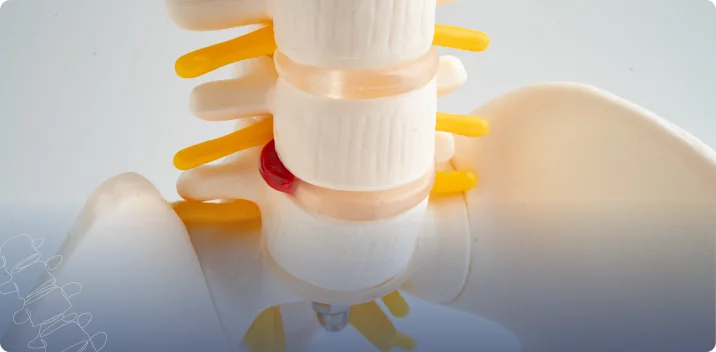
A bulging disc protrudes outward while its tough outer ring stays intact, like a hamburger patty extending past its bun. A herniated disc has a tear in that outer ring, letting the soft inner material leak out and irritate nearby nerves. Herniations tend to cause more intense, radiating symptoms than bulges.
Think of the discs in your spine like jelly doughnuts. Each disc has a tough outer ring and a soft, gel-like center. These discs act as cushions between the bones of your spine, allowing you to bend and move while absorbing shock throughout the day.
A bulging disc happens when the entire disc shifts outward beyond its normal position, similar to a hamburger patty that extends beyond the edges of its bun. The outer layer remains intact, but the disc protrudes into the spinal canal. This condition is actually quite common, and many people have bulging discs without experiencing any noticeable symptoms.
A herniated disc is a more serious development. It occurs when the tough outer layer of the disc tears or ruptures, allowing the soft inner material to push through the opening. Returning to the jelly doughnut comparison, this is similar to biting down and having the filling squeeze out through a crack in the outer dough. This matches how MedlinePlus describes a herniated disk: a ruptured disc whose jelly-like center leaks out and irritates the nearby nerves.
Why Does the Bulging vs Herniated Distinction Matter for Treatment?
Because severity and nerve involvement differ. Many bulging discs cause no symptoms and respond well to conservative care, while herniated discs more often compress nerve roots and call for targeted treatment. Cleveland Clinic reports that herniated disks get better on their own or with nonsurgical treatment for about 9 out of 10 people.
Understanding whether you have a bulging or herniated disc has a direct impact on your treatment plan. Both problems fall under the broader umbrella of disc injuries treated in our Sterling office, but the right plan depends on which one you have. Bulging discs are often less severe and may respond well to conservative care. Many bulging discs never cause symptoms and require no treatment at all.
Herniated discs, by contrast, often produce more intense symptoms because the inner disc material that leaks out can irritate or compress nearby nerve roots. This typically calls for a more targeted intervention to prevent permanent nerve damage and deliver adequate, lasting relief.
How Do Bulging Disc and Herniated Disc Symptoms Differ?
Bulging discs usually cause a localized, dull ache that flares with certain movements. Herniated discs more often cause sharp pain that radiates down an arm or leg, along with numbness, tingling, or weakness, because the leaked disc material presses on nerve roots. A large bulge can mimic herniation symptoms.
Both conditions can cause back pain, but herniated discs more commonly produce radiating pain that shoots down the arms or legs. This happens because the herniated material presses directly on nerve roots exiting the spinal column, producing the shooting leg pain pattern the American Academy of Orthopaedic Surgeons calls sciatica.
With a bulging disc, you might experience a dull ache in your back that worsens with certain movements. The pain tends to be more localized rather than traveling down the limbs. However, if the bulge is large enough, it can also compress nerve roots and produce radiating discomfort similar to a herniation.
Numbness, tingling, or weakness can occur with either condition, but these nerve-related symptoms are more frequently associated with herniated discs.
Conservative Treatment Options in Sterling, VA
Physical Rehabilitation and Exercise
For both bulging and herniated discs, physical rehabilitation often forms the foundation of a successful treatment program. Targeted exercises strengthen the muscles that support your spine, improve flexibility, and reduce pressure on the affected disc. Core strengthening receives particular emphasis because strong abdominal and back muscles provide essential stability for the entire spinal column.
Many patients experience significant improvement with a consistent physical rehabilitation program, though the pace of progress differs from person to person. The key is maintaining the protocol long enough to allow the body to adapt and the tissues to heal properly.
Chiropractic Care and Spinal Alignment
Chiropractic adjustments can help restore proper spinal alignment and relieve pressure on affected discs. When combined with soft tissue therapy and targeted stretching, many patients with bulging discs achieve substantial and lasting relief through this approach, though individual results vary.
For herniated discs, gentle manipulation techniques can provide benefit, though aggressive adjustments are carefully avoided. The providers at Active Lifestyle Medical assess each patient individually and determine the safest, most effective approach based on your specific presentation and imaging findings.
Chiropractic Biophysics
Chiropractic Biophysics is an advanced technique used at Active Lifestyle Medical that focuses on restoring normal spinal alignment and improving overall posture. For disc injury patients, this evidence-based approach targets the structural causes of disc stress rather than simply managing symptoms, which can lead to more durable outcomes over time.
Advanced Treatment Options
When conservative care does not provide sufficient relief, more advanced options become appropriate. This is especially relevant for herniated discs that produce severe nerve compression.
Spinal decompression therapy uses controlled traction to create negative pressure within the disc space. Treatment on a disc decompression table gently stretches the spine in precise, computer-controlled cycles, which can help retract herniated material and promote tissue healing from within. Many patients find this non-surgical approach effective for both bulging and herniated disc conditions, although the response depends on the severity and location of the injury.
Shockwave therapy is another non-invasive modality available at Active Lifestyle Medical that can accelerate healing in damaged soft tissue structures surrounding the affected disc, supporting the overall recovery process.
Pain Management Strategies
Effective pain management allows patients to remain active during the healing process and engage more fully in rehabilitative therapy. The care team at Active Lifestyle Medical takes a non-opioid approach to pain management, focusing on techniques and treatments that address the underlying cause of pain rather than simply masking it with medications.
Some patients benefit from targeted interventions that interrupt persistent pain signals, providing a window of relief while the disc heals and functional strength is rebuilt through physical rehabilitation.
When Does a Disc Problem Require Surgery?
Rarely. Most bulging and herniated discs improve with conservative care. Surgery is generally reserved for progressive weakness, loss of bowel or bladder control, or pain that persists after months of dedicated non-surgical treatment, criteria echoed by the American Association of Neurological Surgeons.
The majority of bulging and herniated discs resolve without surgical intervention. Surgery may be considered when severe nerve compression produces progressive weakness, when bowel or bladder function is affected, or when pain does not improve after several months of dedicated conservative treatment.
Even in cases where surgery becomes necessary, completing non-surgical treatment first often leads to better outcomes. Patients who build strength and mobility through physical rehabilitation and a supervised non-surgical spinal decompression program before surgery typically recover more quickly and report better long-term results.
How Is a Disc Problem Diagnosed in Sterling, VA?
Diagnosis starts with a detailed history and a hands-on physical examination, including movement, reflex, and nerve tension testing. When findings suggest significant nerve involvement, imaging such as MRI confirms whether a disc is bulging or herniated and at which spinal level, so treatment can target the true source of your pain.
The first and most important step in treating any disc condition is obtaining an accurate diagnosis. At Active Lifestyle Medical, the evaluation process includes a thorough physical examination and, where appropriate, imaging studies that reveal exactly what is occurring within the spinal structures. This comprehensive assessment allows the care team to design a treatment plan tailored to your specific condition, whether you are dealing with a bulging disc, a herniated disc, or another underlying spinal issue. To schedule your first visit, contact the team at Active Lifestyle Medical.
Frequently Asked Questions
Can a bulging disc turn into a herniated disc?
Yes, it can. If the weakened outer ring of a bulging disc continues to degenerate or is subjected to repeated strain, it may eventually tear and allow the inner material to escape, which is a herniation. That is one reason early evaluation matters: addressing spinal mechanics while the outer ring is still intact may help you avoid a more painful and complicated injury.
How long does it take a herniated disc to heal?
Many people improve within several weeks to a few months of starting conservative care, and orthopedic guidance suggests most are largely symptom-free within three to four months. Healing time depends on the size and location of the herniation, your overall health, and how consistently you follow your treatment plan, so individual recovery timelines vary considerably.
Is walking good for a bulging or herniated disc?
For most people, yes. Gentle walking keeps the spine mobile, promotes circulation to healing tissues, and helps prevent the stiffness and deconditioning that come with prolonged bed rest. Start with short, comfortable distances on level ground, and stop if pain begins radiating into your leg. Your provider can tell you how much activity is appropriate for your specific condition.
Do I need an MRI before starting treatment?
Not always. A thorough physical examination often provides enough information to begin conservative care safely. MRI is typically reserved for cases with significant nerve symptoms, red-flag findings, or pain that fails to improve after several weeks of treatment. If imaging is needed, the care team can coordinate it and adjust your treatment plan based on the results.
Is chiropractic care safe if I have a herniated disc?
Generally yes, when it is performed by a provider who has evaluated your specific condition. Gentle, low-force techniques are chosen for herniated discs, and aggressive rotational adjustments are avoided. Care is always tailored to your examination and imaging findings, and your provider will refer you for additional evaluation if your presentation suggests that it is needed.
Ready to take the next step?
Talk with the Active Lifestyle Medical team about a Spinal Decompression plan built around your body and your goals.