
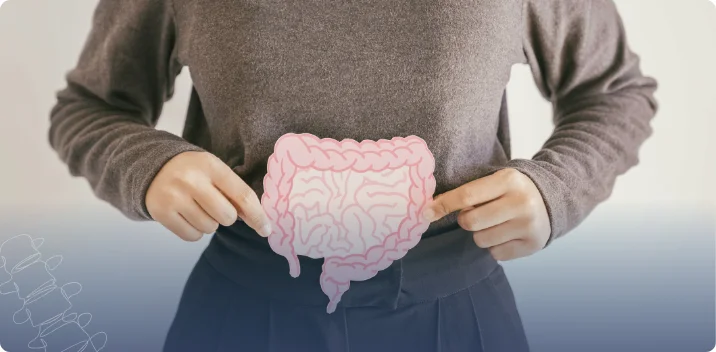
You have chronic bloating, joint pain, brain fog, and fatigue. You have searched for answers online and learned about leaky gut syndrome. You may have brought it up with your gastroenterologist only to be told it is not a recognized diagnosis. Your doctor is partially right. Leaky gut is not an official medical diagnosis in conventional gastroenterology. However, if you are looking for a treatment approach that gets to the root of your digestive dysfunction, functional medicine at Active Lifestyle Medical in Sterling, VA has exactly what you need.
What Does Leaky Gut Actually Mean?
Leaky gut describes increased intestinal permeability. The single-cell lining of your intestine is held together by tight junction proteins, and when those junctions break down, bacteria, toxins, and undigested food particles pass into your bloodstream, where they trigger immune reactions and systemic inflammation.
Your intestinal lining is made up of a single layer of cells held together by tight junction proteins. These junctions allow nutrients to pass into your bloodstream while blocking bacteria, toxins, and undigested food particles from doing the same. When tight junctions begin to break down, your gut becomes permeable. Large molecules that should remain inside your intestines leak into your bloodstream, prompting your immune system to attack these foreign invaders. The result is systemic inflammation that manifests as digestive problems, autoimmune conditions, skin disorders, mood disruptions, and chronic pain. Even conventional sources such as the Cleveland Clinic acknowledge that increased intestinal permeability is real and shows up alongside a number of chronic diseases, even though the syndrome itself has not yet earned a spot in the diagnostic manuals.
What Causes Your Gut to Become Leaky?
The most common drivers are chronic stress, regular NSAID use, alcohol, processed foods, sugar, and gluten, which can trigger zonulin release even in people without celiac disease. In Northern Virginia, seasonal mold exposure adds another layer of gut-barrier stress for many patients.
Chronic stress elevates cortisol, which degrades tight junction proteins over time. Non-steroidal anti-inflammatory drugs such as ibuprofen damage the intestinal lining when used regularly. Alcohol, processed foods, and sugar feed harmful bacteria that produce toxins capable of eroding the gut barrier. Gluten triggers the release of zonulin even in people who do not have celiac disease, a mechanism documented in peer-reviewed research on zonulin and tight junction regulation. In Sterling and across Northern Virginia, seasonal mold exposure and the region's variable climate are contributing triggers that our a functional medicine approach to gut healing team frequently identifies in patients coming from Loudoun County and the surrounding communities.
How Do We Test for Intestinal Permeability?
We use the lactulose mannitol challenge to measure how permeable your gut barrier has become, and we test zonulin levels in stool and blood as a direct marker of tight junction breakdown. Objective lab results guide a targeted healing plan instead of guesswork.
Intestinal permeability is both measurable and treatable at our Sterling clinic, even though it lacks a formal conventional diagnosis. The lactulose mannitol test uses two sugar molecules of different sizes to measure how permeable your gut barrier has become. Elevated lactulose levels in the results indicate that your gut barrier has been compromised. We also test zonulin levels through stool and blood samples, since elevated zonulin is a direct indicator of tight junction breakdown. This kind of gut-focused functional testing gives us a clear, objective picture of what is happening inside your gut so that we can design a targeted healing strategy.
The Functional Medicine Protocol That Heals Leaky Gut
Active Lifestyle Medical uses a systematic approach called the 5R Protocol to address intestinal permeability at its source. The first step is to remove inflammatory foods, infections, and environmental toxins that are actively damaging the gut lining. The second step is to replace digestive enzymes and stomach acid in patients who are deficient. The third step is to reinoculate the gut with therapeutic probiotics that restore a healthy microbial balance. The fourth step is to repair the gut lining using targeted nutrients that support cellular regeneration. The fifth step is to rebalance your lifestyle to sustain gut health over the long term. Treatment is always customized based on your lab results, symptom patterns, and underlying root causes. Some patients require antimicrobial therapy for conditions such as SIBO or candida overgrowth, while others need protocols focused on mold detoxification or environmental toxin clearance.
Critical Nutrients and Diet Changes That Heal Your Gut
L-glutamine serves as the primary fuel source for intestinal cells and directly supports the repair of tight junctions, a role supported by clinical research on glutamine and intestinal permeability. Most patients benefit from five to ten grams of L-glutamine daily during the healing phase. Zinc carnosine supports the healing of intestinal erosions. Collagen peptides supply the amino acids needed to rebuild the structural integrity of the gut lining. Omega-3 fatty acids work to reduce gut inflammation throughout the repair process.
Why Do Food Sensitivities Multiply When Your Gut Leaks?
When undigested food proteins escape into the bloodstream, your immune system builds antibodies against them, so foods you have tolerated your whole life suddenly cause reactions. Most of these sensitivities improve once the gut lining is repaired and immune tolerance is restored.
When large undigested food proteins escape into the bloodstream through a permeable gut wall, your immune system produces antibodies against them. You may find yourself reacting to foods you have eaten without any problems for your entire life. IgG food sensitivity panels often reveal 15 to 30 reactive foods in patients with severe intestinal permeability. The encouraging news is that many of these sensitivities improve significantly once the gut lining is healed. Rather than permanently avoiding dozens of foods, the approach at Active Lifestyle Medical combines targeted elimination diets with gut repair protocols to restore normal immune tolerance over time.
What Does Healing Actually Feel Like?
Many patients notice less bloating and steadier digestion within the first two to four weeks, followed by rising energy and clearer thinking. Joint and skin symptoms usually take eight to twelve weeks to improve. Timelines vary from person to person, which is why we track progress with repeat labs.
During the first two to four weeks of treatment, many patients notice a meaningful reduction in bloating along with improved bowel regularity. Energy levels often begin to rise as nutrient absorption improves. Brain fog begins to clear as inflammatory signaling throughout the body decreases. Joint pain and skin issues take somewhat longer to resolve, with noticeable improvement typically appearing between weeks eight and twelve. Progress is tracked with repeat lab testing at three to six months so that improvements in intestinal permeability markers can be objectively documented.
How Does a Stressed Gut Affect Your Mood and Sleep?
Your gut and brain are in constant conversation. When your gut barrier is under stress, that signaling can influence mood, stress response, and sleep quality, which is why many patients with gut dysfunction describe feeling off both physically and mentally.
The connection runs in both directions. Harvard Health notes that a troubled intestine can send signals to the brain, just as a troubled brain can send signals to the gut. Ongoing stress does not stay in your head. It changes how quickly food moves through your system, shifts the balance of your gut bacteria, and keeps your body locked in a fight or flight pattern that makes it harder for the gut lining to repair itself. Poor sleep compounds the problem by shortening the overnight window when much of that repair happens. This is why the rebalance step of our protocol treats stress management and sleep quality as seriously as diet, because a healing plan that ignores the nervous system is only addressing half of the equation.
How Does Leaky Gut Connect to Autoimmune Disease?
Research increasingly identifies intestinal permeability as a precondition for autoimmune disease in genetically susceptible people. Healing the gut barrier will not reverse an established autoimmune condition, but it frequently reduces symptom severity and antibody levels over time. Results vary by individual.
Leaky gut is not simply a digestive problem. Research increasingly identifies intestinal permeability as a precondition for autoimmune disease development. In genetically susceptible individuals, a compromised gut barrier allows inflammatory triggers to enter the bloodstream and initiate autoimmune reactions throughout the body. Patients across Northern Virginia have found that healing leaky gut plays a meaningful role in reducing autoimmune antibody levels and slowing disease progression. While established autoimmune conditions cannot be fully reversed, controlling gut permeability frequently reduces symptom severity and may lower dependence on medication over time.
Simple Ways to Support Your Gut Between Visits
No single food, cleanse, or supplement repairs a gut barrier in one step. Real progress comes from small actions repeated over time, and the daily habits you build at home reinforce everything the clinical protocol is doing. Center your meals on whole foods such as vegetables, fruit, lean protein, beans, and whole grains, since dietary fiber supports healthy digestion and feeds the beneficial bacteria that help protect your gut wall. Cut back on sugary drinks, heavily processed snacks, and frequent alcohol, all of which irritate the lining you are trying to heal. Finally, pay attention to which foods reliably make you feel worse and bring that list to your provider, rather than eliminating entire food groups on your own and risking unnecessary nutrient gaps.
The Difference Between Managing Symptoms and Healing
Conventional medicine typically responds to digestive dysfunction with acid blockers for reflux, laxatives for constipation, and antispasmodics for cramping. These interventions manage symptoms without exploring why your gut became dysfunctional in the first place. Functional medicine identifies and treats root causes rather than suppressing the signals your body is sending. At Active Lifestyle Medical in Sterling, patients struggling with unexplained digestive issues, autoimmune conditions, or chronic inflammation have achieved lasting improvement by healing intestinal permeability and restoring microbiome balance. If you live in Sterling, Ashburn, Herndon, Cascades, or anywhere in Loudoun County, schedule a consultation to explore comprehensive gut health testing and a personalized healing protocol built around your specific needs.
Frequently Asked Questions
Is leaky gut the same thing as IBS?
No. IBS is a functional bowel diagnosis based on symptom patterns such as cramping, bloating, and altered bowel habits, while leaky gut describes a physical change in the intestinal barrier itself. The two often overlap, and increased permeability can worsen IBS-type symptoms, which is why we evaluate the barrier directly instead of assuming every digestive complaint shares the same cause.
Can supplements alone heal a leaky gut?
Rarely. Nutrients like L-glutamine and zinc carnosine support repair, but they cannot outwork ongoing triggers such as inflammatory foods, chronic stress, hidden infections, or mold exposure. That is why the protocol removes root causes first and uses supplements as one targeted layer of a larger plan, dosed according to your lab results rather than guesswork.
Will I have to avoid gluten and other trigger foods forever?
Not necessarily. Many food reactions develop because a permeable gut lets proteins reach the immune system, and a number of those sensitivities calm down once the barrier is repaired. Some patients reintroduce foods successfully after healing, while others do best with longer-term avoidance of their strongest triggers. Reintroduction is always structured and supervised, never a free-for-all.
Do I need to stop seeing my gastroenterologist?
No. Functional medicine works alongside conventional care, not in place of it. Your gastroenterologist rules out conditions such as celiac disease, inflammatory bowel disease, and structural problems, while our team focuses on the root-cause factors and daily habits that conventional workups often leave unaddressed. We encourage patients to keep both relationships active.
What happens at the first gut health consultation?
We review your full health history, symptom timeline, medications, diet, and stress and sleep patterns, then decide which functional labs will genuinely add value for your case. You leave with a clear testing plan plus initial diet and lifestyle steps, and follow-up visits translate your results into a personalized healing protocol.
Ready to take the next step?
Talk with the Active Lifestyle Medical team about a Functional Medicine plan built around your body and your goals.