Shockwave therapy for arthritis gives you another option when stiff joints start to control your day. You bend to tie your shoe and your knee protests. You reach for the top shelf and your shoulder feels locked in place.
Arthritis turns small, everyday movements into careful calculations. Many people assume their only choices are medication or surgery, yet there is another path that focuses on your body's own repair process. Shockwave therapy uses focused sound waves to help reduce pain, support tissue healing, and help your joints feel more natural when you move.
What Is Shockwave Therapy?
Shockwave therapy is a non-invasive treatment that delivers focused acoustic waves through the skin into painful joints and soft tissue. The pulses stimulate circulation and the body's natural repair response, helping calm pain and stiffness without needles, incisions, or medication.
Shockwave therapy uses acoustic waves, which are sound waves you cannot hear, to reach deeper layers of tissue in and around a joint. The technology was first developed in medicine to break up kidney stones, and over time it has been adapted to address stubborn joint and tendon problems throughout the body.
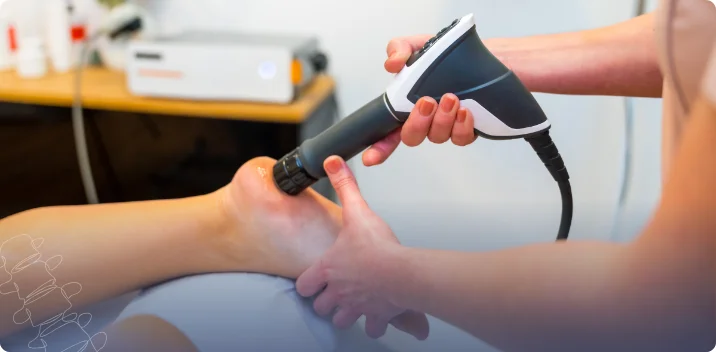
During treatment, a handheld device sends pulses through a small applicator placed on your skin. These pulses travel through soft tissue and into the areas that feel sore or stiff. There are no incisions and no needles involved. The goal is to stimulate the tissue so your body initiates an organized repair response rather than simply continuing to compensate for the discomfort. Clinicians now apply this approach to a wide range of chronic musculoskeletal conditions precisely because it works with the body's natural healing process rather than around it.
For people living with osteoarthritis or long-standing joint pain following an injury, shockwave therapy offers a way to direct care at the joint itself instead of only masking symptoms.
How Does Shockwave Therapy Work for Arthritis?
Shockwave therapy works by delivering controlled acoustic pulses into arthritic tissue. That gentle, targeted stress increases local blood flow, encourages the body to remodel supportive tissue around the joint, and quiets the pain signals that keep a joint feeling stiff and guarded.
Arthritis changes how a joint moves and feels over time. Osteoarthritis, the most common type of arthritis, is a degenerative joint disease in which the tissues within the joint break down gradually. Cartilage can thin, surrounding muscles tighten, and the joint lining becomes increasingly sensitive to pressure and movement. Shockwave therapy gently stresses that area in a controlled way so the body sends additional support and resources to the site.
In practical terms, shockwave therapy may help to:
Improve local blood flow so more oxygen and nutrients reach the joint
Encourage the body to build and remodel supportive tissues around the joint
Calm some of the signals that keep pain and stiffness persistently switched on
When the tissues around a joint glide better and remain less irritated, everyday movements can feel easier and less guarded throughout the day.
Benefits of Shockwave Therapy for Arthritis Patients
If you have tried heat, rest, or basic stretching and your joint still aches every morning, shockwave therapy may offer something meaningfully different.
Pain Relief Without Prescriptions
Many patients report noticeable reductions in pain after completing a series of sessions. Because the therapy targets the tissue directly, relief can last longer than topical creams or other temporary measures. Research points in the same direction: a systematic review and meta-analysis of clinical trials concluded that shockwave therapy reduced pain and improved knee function in people with knee osteoarthritis without increasing the risk of adverse effects. As with any treatment, individual results vary from person to person.
Better Joint Mobility
When inflammation eases and tissue begins to repair itself, range of motion often improves along with it. A stiff hip that makes it difficult to get in and out of your car may loosen enough to allow you to move with less hesitation and more confidence.
No System-Wide Side Effects
Oral medications travel through your entire body. Shockwave therapy stays local. You are not contending with stomach upset, drowsiness, or interactions with other treatments you may already be taking.
A Complement to Movement-Based Care
Shockwave therapy pairs well with physical rehabilitation and chiropractic care. As pain decreases and tissue heals, you can work harder in rehabilitative exercises, gradually building strength and stability around the joint.
Arthritis Relief That Fits Real Life
Active Lifestyle Medical uses focused shockwave therapy to calm sore joints so you can get through your day with more comfort and confidence in Sterling, VA.
What Happens During a Shockwave Therapy Session?
During a session, a provider applies gel to the skin, then moves a handheld applicator over the sore joint while it delivers rapid acoustic pulses. Most visits take about 5 to 15 minutes per treated area, feel like firm tapping, and require no downtime afterward.
A typical visit at Active Lifestyle Medical starts with a conversation about which joints bother you most and which activities have become the most difficult. A small amount of gel is applied to help the device move smoothly over the skin. The shockwave handpiece is then placed on the treatment area, and the machine is activated. Most people describe the sensation as a firm tapping or pulsing, similar to a deep, focused massage.
Treatment sessions are usually brief, often running around 5 to 15 minutes per area, and are tailored to your specific condition and comfort level. You remain awake throughout the entire session, and anesthesia is rarely needed. When the session ends, you can typically walk out of the office and return to light daily activity without a recovery period.
Many arthritis care plans include a short series of focused shockwave sessions spaced roughly one to two weeks apart. Your provider will build a schedule based on how your joints respond and what activities you want to return to.
Shockwave Therapy for Arthritis at Active Lifestyle Medical
At Active Lifestyle Medical, shockwave therapy is a core treatment option for people who want relief from arthritis without moving straight to surgery or long-term medication use. The team uses focused sound waves to calm irritated joints, improve comfort, and help you move with greater confidence in your daily life in and around Sterling, VA.
During your visit, your provider examines which joints are causing the most trouble and how that pain shows up in your routine, from walking and climbing stairs to managing work tasks and getting restful sleep. A shockwave therapy plan is then structured around your specific priorities and lifestyle goals.
Shockwave therapy can be used on its own or paired with chiropractic care and physical rehabilitation when additional support is needed. The goal is straightforward: give your joints targeted, evidence-informed care so they can handle real life with less pain and more freedom of movement.
Who Is a Good Candidate for Shockwave Therapy?
Good candidates typically have osteoarthritis or long-standing joint pain in areas such as the knees, hips, shoulders, or lower back, want a non-surgical option, and have plateaued with basic conservative care. A provider review of your history, medications, and imaging confirms whether it fits.
Shockwave therapy can benefit many people who have osteoarthritis in weight-bearing joints such as the knees, hips, and lower back, as well as joints in the shoulders and other areas that experience significant daily stress. That pattern matches where osteoarthritis most often shows up in the first place: the hands, knees, hips, neck, and lower back.
You may be a strong candidate if:
Joint pain or stiffness has made everyday tasks noticeably harder than they used to be
You want to explore non-surgical and non-medication options before pursuing more invasive care
You have tried basic conservative treatment and feel stuck at the same level of discomfort
Your provider will review your medical history, current medications, and any imaging you have already completed. They will also consider your overall health and goals to determine whether shockwave therapy is an appropriate part of your arthritis care plan.
Choosing Your Next Step
Shockwave therapy for arthritis is not a complete reset for worn joints, yet it can be a powerful way to ease pain, reduce stiffness, and support your body's natural repair capacity. When sound waves are directed into arthritic joints with a clear clinical plan, the tissue often responds with improved circulation, reduced irritation, and a smoother, more comfortable feel during movement.
If you live in or near Sterling, VA, and arthritis has you turning down invitations or carefully planning your day around good hours and bad ones, the team at Active Lifestyle Medical is ready to help. Shockwave therapy, chiropractic care, and physical rehabilitation are combined into personalized plans that focus on what you want to do, not only on what currently hurts.
Reach out today to find out whether this treatment fits your joints, your lifestyle, and your next steps toward a more comfortable, active life.
Frequently Asked Questions
How soon could I notice a difference after starting shockwave therapy?
Timelines differ from person to person. Some people notice a joint feeling looser within the first few sessions, while others see gradual change over several weeks as tissue continues to respond after the series ends. Your provider tracks pain, stiffness, and daily function at each visit and adjusts the plan based on how your joints are actually responding.
Who should not have shockwave therapy?
Shockwave therapy is not the right fit for everyone. Situations such as pregnancy, certain blood-clotting disorders or blood-thinning medications, or an active infection near the treatment area may point toward a different option. That is why every care plan begins with a review of your health history, current medications, and goals before any treatment is scheduled.
Is shockwave therapy the same as therapeutic ultrasound?
No. Both use sound energy, but they behave differently. Therapeutic ultrasound delivers continuous, low-intensity waves often used to gently warm tissue. Shockwave therapy delivers brief, higher-energy acoustic pulses designed to provoke a focused repair response in the tissue it reaches, which is why it is often chosen for stubborn, long-standing joint and tendon problems.
Can shockwave therapy help rheumatoid arthritis?
Most research on shockwave therapy for arthritis focuses on osteoarthritis, the wear-related form of the disease. Rheumatoid arthritis is an autoimmune condition that is managed primarily through medical care aimed at the immune system. If you have an inflammatory type of arthritis, your provider can discuss whether supportive therapies make sense alongside your rheumatology care.
How long do the results of shockwave therapy last?
Duration varies with the joint involved, the severity of the arthritis, and how active you stay afterward. Many people extend their comfort by pairing treatment with strengthening exercises that support the joint. Because arthritis is a progressive condition, some patients return for periodic maintenance sessions, while others go long stretches before feeling they need additional care.
Ready to take the next step?
Talk with the Active Lifestyle Medical team about a Shockwave Therapy plan built around your body and your goals.