
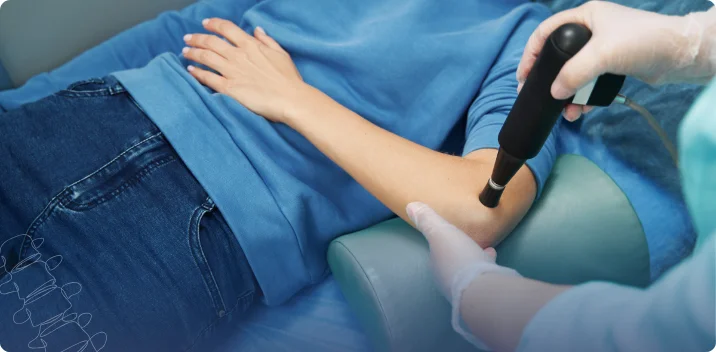
Tendon pain is frustrating because it rarely fails in a dramatic way. It just keeps showing up in the same moments, on the stairs, during your first set at the gym, or after a long commute. Shockwave therapy for tendonitis is easiest to judge when you stop asking if it is working and start tracking what your body can tolerate from week to week. When the tissue is irritated, everyday demands can outpace what it can handle right now.
A smart recovery rarely feels like a straight line. It looks like fewer flare-ups, a calmer next-day response, and more confidence with normal movement. The goal is not perfect comfort overnight. The goal is a measurable trend you can trust.
Why Does Tendon Pain Keep Repeating When Your Schedule Does Not Change?
Tendon pain usually repeats because the tendon is asked to handle more load than it can currently tolerate. When your commute, desk time, and workouts stay the same, the same stress keeps landing on the same tissue, so symptoms return in familiar moments even though nothing obvious changed.
Tendon symptoms often persist because the tissue is being asked to do more than it can handle. That gap shows up as sharp starts, stiffness after rest, or discomfort that returns during familiar tasks.
Tendon Irritation Is Often About Load Tolerance, Not Just Inflammation
Many people hear tendonitis and assume the main issue is swelling. In real life, the bigger issue is frequently tolerance. A tendon has to manage force. When that capacity drops, everyday movement can feel like too much. The National Institute of Arthritis and Musculoskeletal and Skin Diseases notes that tendinitis usually develops from repeating the same motion over and over, which is why an unchanged weekly routine can quietly keep the problem alive.
This is why rest alone rarely solves the problem. If you unload completely, the area may calm down, but it can also lose conditioning. Then the first busy day brings the same pattern back.
The Sympathetic Nervous System Can Turn the Volume Up
Pain is not only a tissue signal. It’s also a safety signal. When the sympathetic nervous system is more active, muscle tone rises and motion options shrink. That protective state can make a tendon feel more sensitive than the tissue itself would suggest.
Stress and poor sleep can add fuel here. Your system stays on alert, and small inputs feel bigger. MedlinePlus makes the same point about chronic stress: your body acts as if you are always in danger, even when the trigger is a deadline rather than a physical threat. Over time, that can shape physiological feedback loops where you move differently, tighten up, and reinforce the same irritation.
The Most Useful Metric Is the 24-Hour Response
A smart plan tracks what happens during activity and what happens the next day. Pain that spikes during a task but settles quickly is different from pain that lingers and stiffens overnight.
Try watching one variable for a week. Pick a consistent walk, a consistent stair set, or a consistent gym movement. Pay attention to what changes within 24 hours. That trend tells you more than any single moment.
How Does Shockwave Therapy Work for Tendonitis?
Shockwave therapy delivers controlled acoustic pressure waves into the irritated tendon. That mechanical signal stimulates local blood flow and the tissue’s own repair and remodeling processes, making daily activity and rehab easier to tolerate over time.
Shockwave therapy uses controlled mechanical energy to stimulate a response in the irritated region. In plain terms, it’s a way to give the tissue a strong, targeted signal so your body can shift how it responds to load.
The goal is to support a better healing environment so rehab and day-to-day activity become easier to tolerate. That process can involve local circulation changes and tissue signaling that encourages remodeling over time. UT Southwestern’s sports medicine team describes it the same way: pressure waves deliver a mechanical force that promotes healing by stimulating blood flow and metabolism, which matters because tendons naturally receive a limited blood supply.
This is also why care should be paired with smart loading. Tendons tend to improve when the signal and the plan match, and the American Academy of Orthopaedic Surgeons notes that physical therapy, including supervised eccentric strengthening, is very helpful for stubborn tendon problems like Achilles tendinitis. At Active Lifestyle Medical, many patients fold shockwave tendon treatment into a broader approach that may also include physical rehabilitation, chiropractic care, and postural correction when those services fit the exam.
If your symptoms are tied to stress and guarding, the nervous system side matters too. Autonomic tone can influence how quickly the area calms down between sessions.
What Should a Smart Recovery Look Like by Weeks 3 to 6?
By weeks 3 to 6, a working plan should show a calmer 24-hour response, shorter warm-up time, and fewer flare-ups after busy days. Comfort does not need to be perfect. What matters is a measurable trend toward stronger load tolerance, and timelines differ from person to person.
Recovery decisions rarely come down to a single visit. Shockwave therapy for tendonitis makes more sense when you judge it as a short, structured trial and ask one practical question: is the trend improving by weeks 3 to 6? The goal is clear progress markers you can track in real life. Cleveland Clinic notes that tendons often need a few weeks to heal once treatment starts, and severe cases can take months, so a defined reassessment window is a fair test rather than an arbitrary deadline.
Weeks 1 to 2: The Signal Is New, so Your Body Is Testing It
Early on, the area may feel different rather than better. Some people notice less stiffness. Others feel temporary soreness after a session. The key is what happens with daily life. If the next-day response is getting calmer, that is a useful sign.
At this stage, avoid chasing pain. Keep activity consistent and controlled. A wild swing in training load can blur the signal.
Weeks 3 to 4: Capacity Starts to Show Up in Normal Tasks
This window is often where smart recovery becomes easier to recognize. A few common trends can appear:
Less sharpness at the start of movement.
A shorter warm-up time before motion feels smooth.
Fewer flare-ups after workdays with lots of steps.
Better tolerance for the same exercise with cleaner form.
Progress also shows up as stability. If the symptom pattern is less reactive, you can make clearer decisions.
Weeks 5 to 6: The Goal Is Stronger Tolerance, Not Constant Comfort
By weeks 5 to 6, the goal is stronger tolerance with less fallout. You may still feel some sensitivity with higher loads, but the bounce-back should be quicker and more predictable. The best signal is fewer rough days in your week, not a flawless day every day.
If the pattern has not moved by this point, that is useful information. It can suggest the main driver is not what it seemed, the loading strategy needs a reset, or another factor is keeping the system on edge.
The Local Reality for Sterling Professionals
Tendon pain is harder to solve when your week is built around driving, sitting, and rushing between commitments. Many patients in Sterling are managing long stretches on Route 7, VA-28, and side roads near Sterling Blvd. Add a commute from Herndon, Ashburn, or Potomac Falls, and you get the same story: less time for recovery, more repeated stress.
Consistency becomes the real challenge. Care only works if it fits your schedule. Active Lifestyle Medical is located at 20 Pidgeon Hill Dr #102, Sterling, VA, which can be a practical stop if you are coming from the Dulles Town Center area or cutting through the Route 7 corridor.
Local context also shapes what you can track. Driving tolerance, stair tolerance, and next-day stiffness after work are real metrics for busy adults. Those markers make the plan feel grounded, not theoretical.
What Should You Expect During a Shockwave Therapy Visit?
Expect a focused history, a movement-based exam that watches how the tendon behaves under load, and a specific plan with progress checkpoints. If shockwave fits your findings, sessions are paired with home steps for pacing, mobility, and controlled strengthening, plus a set reassessment window.
A strong first visit should feel organized. The conversation usually starts with a clear timeline: when symptoms began, what tends to trigger them, what reliably settles them, and how daily routines have shifted. That context matters because tendon pain often follows repeatable inputs.
The exam is typically practical and movement-based. It looks at how the area behaves under load, how nearby joints share stress, and whether anything in the pattern suggests a need for additional medical evaluation.
From there, the plan should get specific. Shockwave rarely works as a standalone fix, so it typically sits inside coordinated pain control care rather than replacing everything else. If shockwave is appropriate, progress should be tied to clear checkpoints and a set reassessment window. Common measures include morning stiffness, pain during a standard walk, and the 24-hour response after activity.
Home steps are usually part of the process as well. These tend to focus on pacing, mobility, and controlled strengthening so the tissue can rebuild capacity between visits.
Choosing Your Next Step
Smart tendon recovery is not about piling on more work. It’s about choosing the right inputs, matching them to the pattern, and tracking how the tissue responds over time. When a plan has clear checkpoints, decisions get simpler and confidence builds because progress is measurable.
If you want a structured evaluation and a plan you can track, take a closer look at how a shockwave therapy plan is structured, then schedule an appointment at Active Lifestyle Medical. When your exam findings support it, shockwave therapy for tendonitis can be a practical step toward steadier tolerance and a calmer day-to-day baseline. Individual results vary, which is exactly why the plan is built around checkpoints you can see.
Frequently Asked Questions
How many shockwave therapy sessions will I need?
There is no single number that fits everyone. The right count depends on which tendon is involved, how long it has been irritated, and how your symptoms respond between visits. Most structured plans set a defined reassessment window up front, often in the weeks 3 to 6 range, so you and your provider can judge the trend and adjust instead of continuing indefinitely. Responses vary from person to person.
Does shockwave therapy hurt?
Most people describe the sensation as a firm, rapid tapping or pulsing pressure over the treatment area rather than sharp pain. Intensity can usually be adjusted to keep the session tolerable. Mild soreness afterward is common and often settles within a day or two. If an area is especially sensitive, tell your provider so the settings and positioning can be modified.
Can I keep working out while doing shockwave therapy?
Usually yes, with adjustments. Complete rest can decondition the tendon, and big swings in training load make it hard to tell whether treatment is helping. Most plans keep you moving with consistent, controlled activity while modifying the specific movements that spike symptoms. Your provider can help you set load levels and decide when to progress based on your 24-hour response.
Which tendon problems is shockwave therapy commonly used for?
It is most often considered for stubborn, load-related tendon irritation that has not settled with rest and basic care. Common examples include Achilles tendon pain, patellar tendon pain at the knee, tennis elbow, shoulder tendinopathy, and plantar fascia-related heel pain. Whether it fits your situation depends on an exam, since symptoms in one area sometimes trace back to how nearby joints share load.
When should I get tendon pain evaluated instead of waiting it out?
If pain has lingered for several weeks, keeps returning with the same activities, or is changing how you move, an evaluation is reasonable. Warning signs like significant swelling, night pain, weakness, or pain after a sudden pop deserve prompt attention. Early assessment also matters because long stretches of complete rest can lower the tendon’s conditioning, which makes the eventual return to activity harder.
Ready to take the next step?
Talk with the Active Lifestyle Medical team about a Shockwave Therapy plan built around your body and your goals.